Back to Projects
Applied Product Design: Mentoring for Innovation in Waste Reduction
Management Mentoring Project
Project Overview
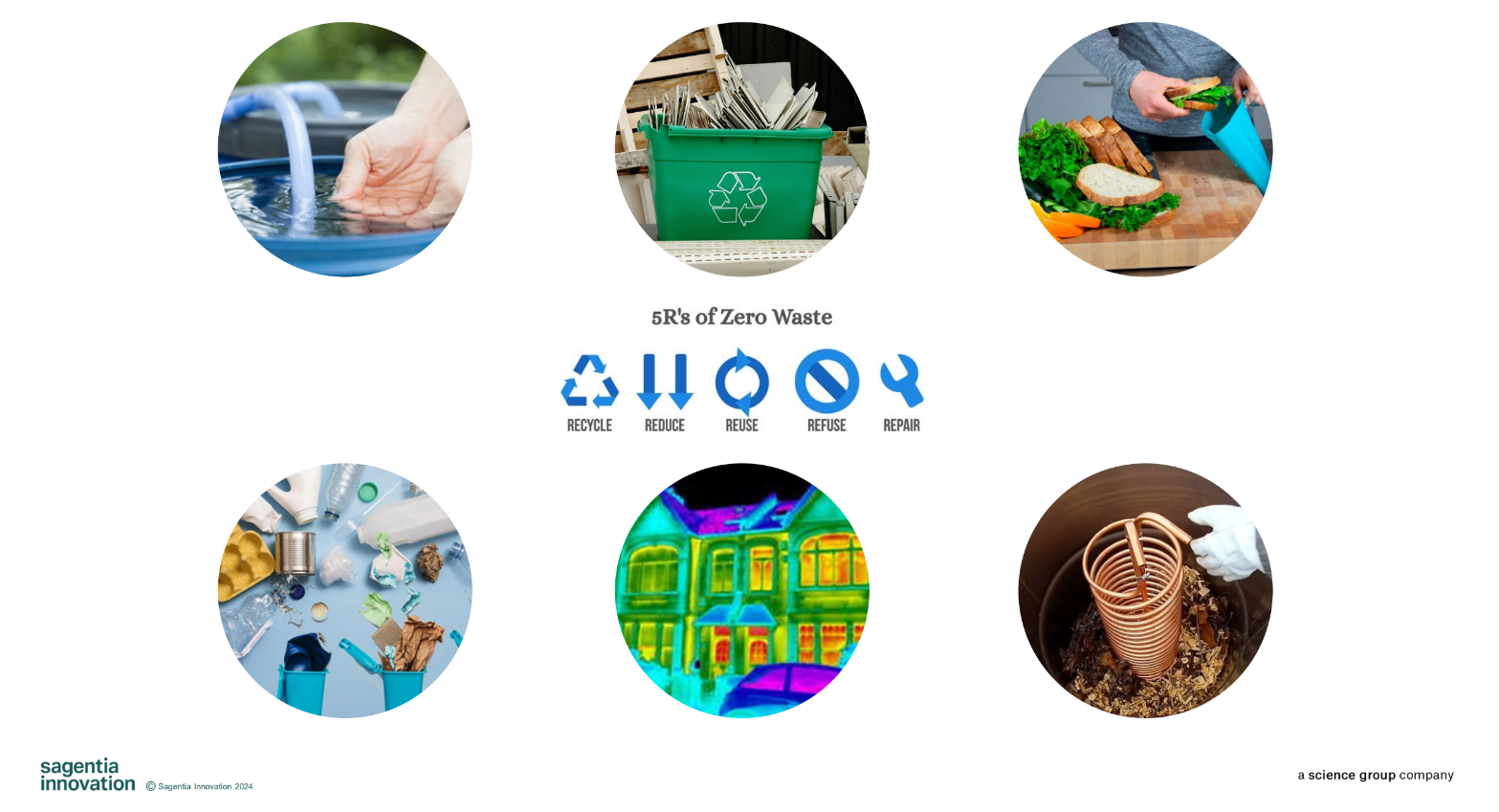
In this mentoring project, I guided a group of product design students through an applied product design challenge focused on reducing household waste. The students worked closely with industry experts from Sagentia Innovation, gaining firsthand insights into real-world applications and commercial viability considerations. This mentorship involved not only shaping an effective design strategy but also nurturing team growth, autonomy, and problem-solving skills.
Objectives
- Facilitate a clear understanding of the product design process by guiding mentees through structured, problem-solving methodologies.
- Encourage independent critical thinking and decision-making based on measurable data and realistic market needs.
- Foster effective team collaboration, clear communication, and equitable distribution of responsibilities.
- Ensure mentees developed autonomy in managing project tasks, setting objectives, and making informed design decisions.
- Collaborate closely with Sagentia Innovation to enhance industry relevance and market alignment of product concepts.
Methodology
Throughout the mentorship, my partner and I adopted an empowering and structured approach, including:
Team Building and Goal Setting:
- Conducted initial sessions for team introductions, SWOT analyses, and clear delegation of roles based on individual strengths.
- Established effective communication channels (e.g., WhatsApp and OneDrive) to streamline collaboration and document sharing.
Guided Market Research and Ideation:
- Guided the group to conduct thorough market research, identifying specific niches within the broader topic of household waste reduction.
- Fostered idea generation sessions, emphasizing quantity over initial quality to spark creativity, and facilitated narrowing down numerous concepts (from 90 to 6 viable designs).
Collaboration with Industry Experts (Sagentia Innovation):
- Engaged directly with industry specialists from Sagentia to validate and refine product concepts.
- Used feedback sessions to identify market gaps, evaluate consumer needs, and emphasize product simplicity, usability, aesthetics, and ethical alignment with societal values.
Design Evaluation and Decision Making:
- Guided the team through constructing detailed consumer personas and Product Design Specifications (PDS) to frame objective evaluation.
- Led structured Pugh matrix sessions, ensuring objective decision-making and reducing personal bias during concept selection.
Key Challenges and Solutions
Team Dynamics and Communication:
- Addressed issues with poor attendance, uneven engagement, and communication gaps by reinforcing the importance of accountability, regular follow-ups, and clearer task delegations.
- Implemented regular reflective sessions, emphasizing accountability and clearly outlining next steps to maintain momentum and cohesion.
Decision-Making and Market Alignment:
- Identified early challenges related to overly broad concepts, leading the team to more targeted, data-supported decisions.
- Leveraged external expertise (Sagentia) to redirect team focus toward market-driven design, emphasizing practicality, usability, simplicity, and ethical implementation.
Results and Outcomes
- Successfully guided the team to narrow down and develop a promising concept aimed at reducing food waste, specifically targeting upper-middle-class households.
- Completed and refined a consumer persona and Product Design Specification (PDS), providing a clear foundation for detailed design decisions.
- Integrated industry feedback from Sagentia, enhancing project alignment with real-world expectations, highlighting critical insights in product usability, compactness, pricing strategies, and ethical considerations.
- Strengthened the group's understanding of commercial viability and market dynamics, significantly improving their final product proposal's potential for real-world application.
Reflections and Growth
- Learned valuable lessons in mentoring, especially regarding balancing support and autonomy—stepping in to guide when necessary while encouraging independence and critical thinking.
- Recognized personal knowledge gaps, given my engineering management background compared to the applied product design focus, leading to greater adaptability and research-driven mentorship.
- Enhanced my own communication, leadership, and team facilitation skills through real-time problem-solving, conflict resolution, and constructive feedback sessions.
Stakeholder Feedback
- Received positive feedback from the project supervisor and mentees for consistent presence, active engagement, and facilitating clear progression from ideation to actionable solutions.
- Mentees valued approachability, clear guidance, and the emphasis on accountability and real-world commercial considerations.
- The collaboration with Sagentia Innovation provided the team with tangible insights, significantly enhancing the project's quality and practical relevance.
Skills Applied
Mentoring and Coaching
Applied Product Design
Market Research
Critical Thinking
Communication
Team Leadership
Collaboration
Project Management
Ethical Considerations