Back to Projects
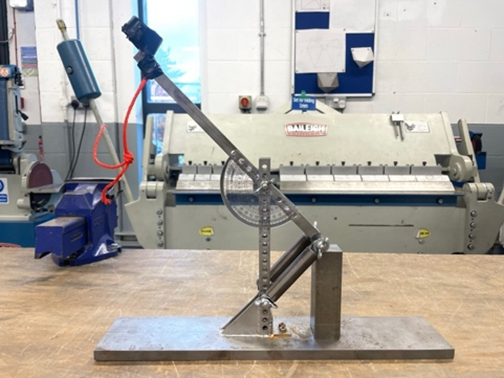
Medieval Weapons System: Catapult Design
Historical Engineering Project
Project Overview
In this historical engineering project, I designed and modeled a medieval catapult system, combining historical research with modern engineering principles. The project involved detailed mechanical design, structural analysis, and historical accuracy considerations to create a functional catapult model that demonstrates the engineering ingenuity of medieval warfare technology.
Objectives
- Research and analyze historical catapult designs from medieval warfare to understand their mechanical principles and construction techniques.
- Design a historically accurate yet functionally optimized catapult model using modern engineering tools and analysis methods.
- Create detailed technical drawings and specifications for each component of the catapult system.
- Analyze the mechanical performance, including projectile trajectory, energy transfer efficiency, and structural integrity under load.
- Document the design process and engineering decisions to demonstrate the application of mechanical engineering principles to historical technology.
Methodology
The project followed a systematic approach combining historical research with engineering design:
- Historical Research and Analysis:
- Conducted extensive research on medieval catapult designs, focusing on trebuchets, mangonels, and ballistas.
- Analyzed historical documents, illustrations, and archaeological findings to understand authentic construction methods and materials.
- Engineering Design and Modeling:
- Developed detailed CAD models of the catapult components, including the frame, throwing arm, counterweight system, and release mechanism.
- Applied mechanical engineering principles to optimize the design for maximum throwing distance while maintaining historical accuracy.
- Performance Analysis:
- Conducted stress analysis on critical components to ensure structural integrity during operation.
- Performed kinematic and dynamic simulations to predict projectile trajectories and optimize the counterweight-to-arm ratio.
- Analyzed energy transfer efficiency from potential energy in the counterweight to kinetic energy in the projectile.
- Documentation and Visualization:
- Created detailed engineering drawings with precise dimensions and assembly instructions.
- Developed visual representations of the catapult's operation, including motion studies and trajectory analyses.
Key Deliverables
- Comprehensive Design Documentation: Complete set of engineering drawings and specifications for all catapult components.
- 3D CAD Models: Detailed digital models of the entire catapult assembly and individual components.
- Performance Analysis Report: Technical analysis of the catapult's mechanical performance, including trajectory calculations and structural integrity assessments.
- Historical Context Document: Research findings on medieval catapult technology and how the design incorporates historical elements.
- Assembly and Operation Guide: Detailed instructions for constructing and operating the catapult model.
Engineering Challenges and Solutions
- Balancing Historical Accuracy with Performance: Maintained the authentic appearance and mechanical principles of medieval designs while incorporating subtle engineering improvements to enhance performance and safety.
- Structural Integrity: Designed reinforced joints and support structures to handle the high stresses during the catapult's firing sequence.
- Release Mechanism Design: Developed a reliable and adjustable release mechanism that allows for consistent performance while reflecting medieval technology capabilities.
- Material Selection: Selected appropriate modern materials that could authentically represent historical materials while providing necessary strength and durability.
Skills Applied
Historical Engineering Research
Mechanical Design & Analysis
CAD Modeling & Simulation
Structural Engineering
Kinematic & Dynamic Analysis
Technical Documentation
Material Selection
Engineering Drawing