Sustainable Product Design: Algae-Derived PHB Gillnets
Project Overview
This sustainable product design project explores the development of biodegradable fishing nets made from algae-derived polyhydroxybutyrate (PHB) as an alternative to conventional nylon gillnets. The project addresses the critical environmental issue of ghost fishing and marine plastic pollution, offering a solution that maintains fishing efficiency while ensuring safe biodegradation if lost at sea.
Project Context
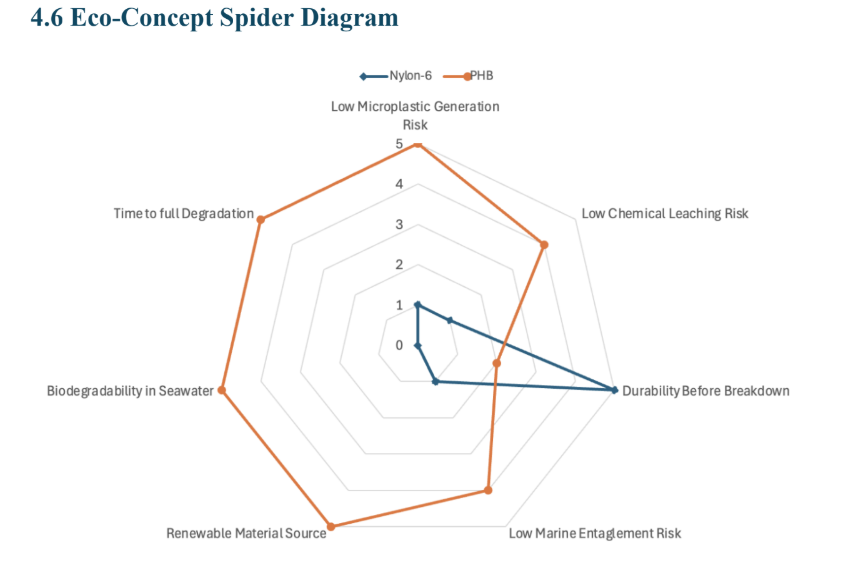
The world's marine ecosystems are increasingly subjected to pressure from heightened plastic pollution, with ghost fishing now recognised as the primary driver of environmental and economic losses. Nylon gillnets have been the dominant gear type due to their longevity, affordability, and ease of use. Yet these same attributes render them environmentally unsafe when lost or abandoned, as nylon can last up to 600-800 years in the ocean and accounts for up to 46% macroplastic waste by mass in the Great Pacific Garbage Patch.
As a response to this mounting crisis, consumer behavior and regulatory frameworks are evolving. The European Union's Single-Use Plastics Directive and sustainability standards like the Marine Stewardship Council (MSC) are pressuring fisheries to change to less harmful equipment. However, biodegradable alternatives have not yet matched traditional nylon nets in functionality, price competitiveness, and mass production scalability.
Against this backdrop, algae-derived polyhydroxybutyrate (PHB) holds promise as a substitute. Unlike polylactic acid (PLA) and other industrial compostable bioplastics, PHB possesses true marine biodegradability within a year, while rivalling nylon in tensile strength. Furthermore, its production through carbon-sequestering algae avoids land conflict and fossil fuel dependency, aligning with circular economy and climate resilience strategies.
Project Statement
The widespread use of nylon PA-6 gillnets in commercial fisheries has created a critical environmental problem: the accumulation of long-term plastic waste in marine ecosystems. Lost or discarded, these nets dominate ghost fishing, microplastic pollution, and chemical leaching, with multi-century lasting environmental impacts. Existing mitigation options are limited by the non-degradable nature of conventional materials and the lack of economically viable, functionally equivalent alternatives.
This project addresses the pressing demand for a green gillnet alternative through research into the possibility of using polyhydroxybutyrate (PHB) derived from algae as a bio-based nylon alternative. Through life cycle assessment, materials science, and eco-design principles, the project develops a low-impact gillnet with minimization of long-term ecological harm. This project supports global efforts to stem plastic waste in the world's oceans, decrease greenhouse gas emissions, align with SDGs and contribute to the transition towards circular, regenerative material flows in ocean businesses.
Critical Evaluation of LCA Results
Freshwater Eutrophication
Explanation: Studies conducted in the Baltic Sea showed that wild algae harvesting disrupts biomass. Trawling to lift Furcellaria lumbricalis from the seabed resulted in clay and mud-rich detritus being collected (2% of the catch), which contains dissolved phosphorus. When washed away, this causes eutrophication in nearby freshwater bodies, as every tonne of algae collected contains a measurable freshwater eutrophication score.
Mitigation: Reducing the diesel used by harvesting vessels by 10% would reduce the wild harvest impact by about 5%. Using low shear skimming gear and antifouling-free nets would further reduce environmental impact.
Marine Eutrophication
Explanation: Rototilling (rotating mechanical blades) during offshore harvesting stirs up fine sediment and algae fragments, increasing water turbidity. This releases nitrogen and phosphorus, driving up eutrophication in oceans.
Mitigation: To reduce marine eutrophication, hand harvest tools that don't disturb sediment could be used, with immediate return of seawater to the site to prevent nutrient discharge.
Acidification
Explanation: In the production process of PHB material, extraction from bacteria typically uses chemicals like 1,2-dichloroethane. While highly effective, these chemicals cause acidification.
Mitigation: DMC (Dimethyl Carbonate) offers a less harmful alternative solvent that reduces acidification levels by about 60% and is much more environmentally friendly.
Conclusion
The development of algae-derived PHB gillnets represents a significant step toward sustainable fishing practices. By addressing the critical environmental issues associated with conventional nylon nets while maintaining functional performance, this project contributes to the transition toward circular, regenerative material flows in ocean industries.
The life cycle assessment results highlight areas for further improvement in the production process, particularly regarding harvesting methods and chemical usage. With appropriate mitigation strategies, PHB gillnets can offer a truly sustainable alternative that aligns with global efforts to reduce marine plastic pollution and support the health of ocean ecosystems.